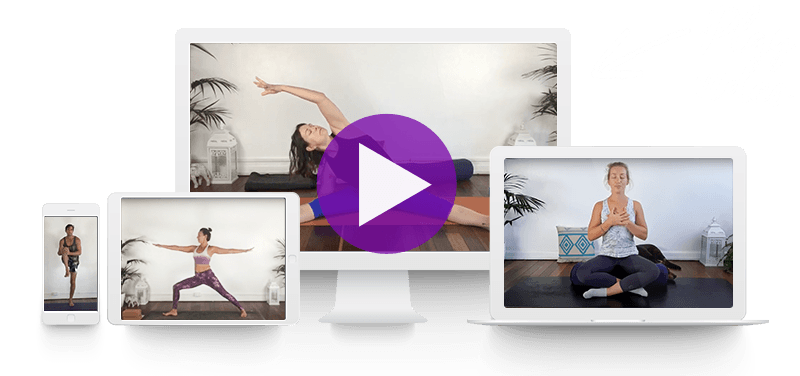
Yoga and meditation have both been shown to have a positive impact on sleep quality. In this article, we will explore the reasons why and provide specific examples of how these practices can benefit both your sleep and your overall well-being.
Reduce Stress & Anxiety
One of the main ways that yoga and meditation can improve sleep is by reducing stress and anxiety. These practices involve focusing on the present moment and letting go of thoughts and worries, which helps to calm the mind and body. When we are stressed or anxious, it can be difficult to fall asleep or stay asleep, but by practicing yoga and meditation, we can create a sense of relaxation and calm that can make it easier to sleep soundly.
Promote Healthy Habits
In addition to reducing stress and anxiety, yoga and meditation can also help to improve sleep by promoting healthy habits and routines. Many people find that incorporating these practices into their daily routine can help them establish a consistent bedtime and wake-up time, which can be beneficial for sleep. Additionally, certain yoga poses, such as forward folds and child’s pose, can help to relax the body and prepare it for sleep, while meditation can help to clear the mind and create a sense of inner peace.
Boost Mood, Reduce Inflammation and Improve Cardiovascular Health
There are also numerous other benefits to practicing yoga and meditation, beyond just improving sleep. These practices have been shown to boost mood, reduce pain and inflammation, improve cardiovascular health, and even increase lifespan. By incorporating yoga and meditation into your daily routine, you can not only improve your sleep, but also improve your overall well-being and quality of life.
Another popular way to achieve a better night’s sleep is to invest in a quality silk pillowcase. Not only are they more comfortable than standard cotton pillowcases, but they also help reduce friction, minimise wrinkles, and help keep hair healthy and skin hydrated. Silk pillowcases are also hypoallergenic, which means they can be beneficial for those with allergies or hay fever. Additionally, the natural breathability of silk helps keep your head cool while sleeping. Investing in a silk pillowcase can help you sleep more soundly and wake up feeling well-rested and refreshed. We love the luxury silk pillowcases from A Good Night Sleep for their high quality and durability. You can buy them online here.
Some More Practical Tips to Help You Sleep Better
Here are a few tips to keep in mind when looking to improve quality of sleep.
Yoga poses that focus on relaxation, such as corpse pose or savasana, can help to calm the body and mind and prepare them for sleep.
Meditation can help to quiet the mind and create a sense of inner peace, which can make it easier to fall asleep and stay asleep.
Both yoga and meditation can improve sleep by reducing stress and anxiety. When we are relaxed and calm, it is easier to fall asleep and stay asleep.
Incorporating yoga and meditation classes into a daily routine can help to establish a consistent bedtime and wake-up time, which can be beneficial for sleep.
Regular practice of these techniques can also improve cardiovascular health, reduce inflammation, boost mood, and increase lifespan, all of which can contribute to better sleep quality.
In conclusion, if you are looking to improve your sleep, consider incorporating yoga and meditation into your daily routine. These practices have been shown to reduce stress and anxiety, promote healthy habits and routines, and offer numerous other benefits for overall well-being. With regular practice, you may find that your sleep quality improves and you feel more rested and rejuvenated.
https://lovelifeliveyoga.com.au/wp-content/uploads/2022/12/Yoga-and-Meditation-The-Natural-Way-to-Better-Sleep-love-life-live-yoga-online-classes.jpg12011800David Lee-SchneiderDavid Lee-Schneider2022-12-31 15:58:132022-12-31 16:13:56Yoga and Meditation: The Natural Way to Better Sleep
In this noisy world that we live in, it’s becoming increasingly difficult to find the space to shut off and give your body and mind the rest they need and deserve. Our UNWIND yoga classes are designed to help you do just that – let go and relax.
Here are 5 online yoga classes you can watch at home to help you escape your busy schedule for a while and give yourself some much-needed rest.
These classes are included in our online membership.
Not a member yet? Sign up for a FREE 7-Day Trial to access over 156 Portfolio Items online!
1. UNWIND 30 with Carmen (Level 1)
Yin for your spine. You are only as young as your spine feels.
In this class, we allow our spine to move in all 6 directions, using forward fold, backbend, right side stretch, left side stretch, right twist and left twist. Keeping the spine moving every day ensures optimal health of our back.
Give your body a rest with this 30-minute yin yoga class.
A short everyday sequence for relaxing the spine, easing tension in the neck, shoulders and hips and preparing for the day ahead or a good night’s sleep.
Join Carmen for an easy-going 60-minute unwind sequence.
In this gentle class, we focus on stimulating your natural ‘rest and digest’ mode (the sympathetic nervous system) giving your body, mind and nervous system a highly important and well-deserved break.
Get grounded in this Yin class to help you feel connected to the earth, and to yourself.
Begin with a short meditation to centre and set the tone for 60 minutes of nourishment and support, helping you to digest life and all that is around you.
https://lovelifeliveyoga.com.au/wp-content/uploads/2020/12/online-yoga-meditation-classes.jpg9341400David Lee-SchneiderDavid Lee-Schneider2020-12-01 21:26:552020-12-01 23:16:125 Online Yoga Classes to Unwind & Calm Your Mind
When just starting out with Yoga, it’s not always easy to find a class that suitable for a beginner. With so many classes to choose from, it can be a little overwhelming to pick one.
This class with Carmen is an easy-going 60-minute sequence for complete beginners. It will stimulate your natural ‘rest and digest’ mode (the sympathetic nervous system) giving your body, mind and nervous system a highly important and well-deserved break.
Access this beginner-Friendly Yin Yoga class & over 150 classes absolutely free with our 7-day trial:
WHY YIN YOGA IS A GREAT WAY TO START
Find your comfortable edge
Find stillness
Hold for time
Your comfortable edge means a point where you feel sensation, but not pain. If you ever feel pain, ease out of the pose right away.
Once at your comfortable edge, do your best to find stillness. Follow your breath and try not to fidget! If your body invites you to move deeper, then do so, but there is no forcing yourself into a posture in yin yoga.
Finally, you hold for time. Beginner Yin Yoga classes are 1-3 minutes. In general, more “advanced” yin classes are characterized by longer holds, not “more difficult” or “more advanced” asana.
“When you reach your edge, soften. Soften until you slip through constraints and can create a new rhythm, a new routine, a new release. Water is soft yet powerful. Reach your edge and soften.” Victoria Erikson
If you want to know more about yin yoga, the very best book available is Bernie Clark’s Complete Guide to Yin Yoga. He describes the science of yin yoga to explain how it works on the body’s deep connective tissues to promote better health and flexibility.
Prepare your body and mind for a good night’s sleep with 1 week of bedtime yoga & meditation.
All classes are around 10-30 minutes long and are a mix of Yin & Yang yoga plus mindfulness meditation sessions to help you before bed.
Practise these classes every night for a week and see the difference just a short amount of yoga can make.
Who is this program for?
This program is great for everyone of any levels. if you have sleep problems, wake up feeling stiff and unrested, or if you just look for relaxation end to your day.
A short sequence of slow stretches for first thing in the morning, this class can be done even before stepping out of bed to have you primed up and ready to face the day.
A short everyday sequence for relaxing the spine, easing tension in the neck, shoulders and hips and preparing for the day ahead or the night time sleep.
Yoga has been growing in popularity for the last few decades but there are still a few things that hold people back from giving it a go. We love life and live yoga as it has so many benefits for your physical and mental wellbeing.
1. Yoga is only for people who are flexible and fit
Yoga is something that you do for yourself, to help your mental and physical fitness, you’re not comparing yourself to anyone else, you just have to concentrate on your own abilities and needs. Start slowly, with a beginners class or workshop and try to build up your abilities through regular practice. Whatever your aim, whether you’re hoping to get fitter through yoga or use it to practice mindfulness and find some mental space, you can work within your abilities.
You don’t have to be super bendy right now, your regular practice will help you improve your flexibility. Neither do you need to be young to start practising yoga. Whatever age you are, you can work at your own pace. The practice of yoga needs you to combine, flexibility, balance and power and even if you need to work on one or two of these areas you can take the time to do so. Perfection isn’t necessary and you’re not comparing yourself to anyone else, you are on your own journey.
2. Yoga is just for women
Believe it or not, but Yoga was originally taught and practised by men only but its popularity in the western world was driven by women and the yoga studio has felt dominated by the girls. These days men can still feel a little apprehensive about taking part in a yoga class but they needn’t worry, these days a class will almost always have several men taking part.
Yoga can be really effective in building strength and muscle, it can be a complementary part of a workout regimen or a stand-alone way to gain a little focus. In the Flow 60 yoga class, we practice of flowing from one posture from another, concentrating on your breathing as you go. Unwind 60 is popular with beginners as it is gentle and focuses on the alignments in the asanas (poses), it is beneficial as it concentrates on the mental as well as the physical fundamentals of yoga.
You can start with one style and move on to something more challenging as you progress in knowledge and fitness.
3. Yoga is a religion
Yoga isn’t related to any formal religion, it’s more of a philosophy of keeping your mind and body healthy by giving you some space to breathe.
The practice of yoga is for everyone. Whether your lifestyle is green smoothies and long walks, or chaotic and full of kids, taking a moment to recharge and nurture yourself is good for everybody. Old, young, male, or female there is a place for you in a yoga class. You will enjoy connecting with other yogis and appreciate the positive energy of a group yoga class.
The spiritual aspect of yoga centres around the idea of the joining of body and spirit in fostering a wholesome relationship with yourself, your environment and others.
https://lovelifeliveyoga.com.au/wp-content/uploads/2020/01/yoga-myths.jpg6851200Carmen Lee-SchneiderCarmen Lee-Schneider2020-01-26 15:17:252020-04-22 14:46:48Yoga Myths: 3 Things About Yoga That Aren’t True
Attending a yoga class when you have never done yoga before can be a little daunting. Most people are afraid of making mistakes or even looking silly when getting started and we totally get it. However, keep in mind that every yogi had to start somewhere. In fact, we’ve all been there. So, to help you feel a little more at ease, here are four mistakes most beginners make when first getting started with yoga and how you can avoid making them.
1. Comparing Yourself To Other Yogis
Let’s address the elephant in the room. When you start going to a yoga studio it can be tempting to spend a considerable amount of time checking out what other people are doing and start comparing. Are your asanas better or worse than your neighbour’s? are you as flexible as the person next to you?
If you compare yourself to others in the class you end up losing focus on what you are doing and why you are there. Whether you look better or worse than other people in the class doesn’t matter, yoga should be a time to carve out some space just for you to relax and breathe.
Spend your time focusing on your asanas and letting go of your outsides stresses. As a beginner you won’t be perfect, your body may not be able to do everything straight away but you will improve with practice. Yoga is a personal journey, not a competition. Focus on your body and on your breath and you’ll leave class feeling fulfilled. Make sure to scan the yoga timetable for classes suitable for beginners.
2. Rushing Asanas
Give yourself time for each pose that you do and pay attention to your whole body. If you rush around in your day to day life it is tempting to treat your yoga class the same way.
Remember that yoga is not a race to the finish line. Take time to find space, to settle on your mat and prepare your body for the asana. Ensure your body is in alignment before you start and most of all: Don’t forget to breathe! Slowly get into the different poses, checking your movements then allow time for several rounds of deep breathing as you remain in each pose. Remember to also come out of the pose in a gentle way with an awareness of your movements.
3. Getting Frustrated
Yoga looks deceptively simple, especially if you already do lots of sports or exercise. Often people new to practising yoga think they will be able to join a class and pick it up perfectly immediately. It is worth remembering that even if you are used to physical activity, your body will be working in a new way. If you don’t do much in the way of exercise you will need to work the stiffness out of your body with gentle practice.
The asanas in yoga need you to begin to stretch and move your body in a way that’s new. Be kind to yourself, don’t get cross and frustrated, you will need time and practice to get into those perfect poses. Yoga is a gentle exercise and each time you come to class you’ll notice something get a little easier as your muscles learn the movements.
4. Leaving Too Soon
The final relaxation (also called Shavasana) is a great way to end a class, this is a process where you relax your body as the teacher guides you through a wind-down relaxation. This process can last from 5 minutes upwards and is important in giving yourself a moment to absorb what you have practised in class and get ready to go back to real life.
Some new students can feel that this part of the class isn’t essential so they gather up their stuff and leave to get on with the rest of their day. This is a mistake as relaxation is one of the most important parts of the session. It gives your muscles a chance to stretch and relax but even more importantly it gives you the mental space to breathe and calm.
https://lovelifeliveyoga.com.au/wp-content/uploads/2020/04/yoga-meditation-online-classes-llly.jpg5861028Carmen Lee-SchneiderCarmen Lee-Schneider2019-10-14 16:46:552022-03-10 22:06:394 Mistakes Beginners Make When Doing Yoga at Home
If you’re dealing with back pain, yoga may be just what the doctor ordered. Yoga is a mind-body therapy that’s often recommended to treat not only back pain but the stress that accompanies it. The appropriate poses can relax and strengthen your body.
You may have heard that yoga can be beneficial when it comes to back pain. Here are 10 poses to try, why it works & more.
Practicing yoga for even a few minutes a day can help you gain more awareness of your body. This will help you notice where you’re holding tension and where you have imbalances. You can use this awareness to bring yourself into balance and alignment.
Keep reading to learn more about how these poses may be useful in treating back pain.
1. Cat-Cow
This gentle, accessible backbend stretches and mobilises the spine. Practicing this pose also stretches your torso, shoulders, and neck.
Muscles worked:
erector spinae
rectus abdominis
triceps
serratus anterior
gluteus maximus
To do this:
Get on all fours.
Place your wrists underneath your shoulders and your knees underneath your hips.
Balance your weight evenly between all four points.
Inhale as you look up and let your stomach drop down toward the mat.
Exhale as you tuck your chin into your chest, draw your navel toward your spine, and arch your spine toward the ceiling.
Maintain awareness of your body as you do this movement.
Focus on noting and releasing tension in your body.
Continue this fluid movement for at least 1 minute.
2. Downward-Facing Dog
This traditional forward bend can be restful and rejuvenating. Practicing this pose can help relieve back pain and sciatica. It helps to work out imbalances in the body and improves strength.
Muscles worked:
hamstrings
deltoids
gluteus maximus
triceps
quadriceps
To do this:
Get on all fours.
Place your hands in alignment under your wrists and your knees under your hips.
Press into your hands, tuck your toes under, and lift up your knees.
Bring your sitting bones up toward the ceiling.
Keep a slight bend in your knees and lengthen your spine and tailbone.
Keep your heels slightly off the ground.
Press firmly into your hands.
Distribute your weight evenly between both sides of your body, paying attention to the position of your hips and shoulders.
Keep your head in line with your upper arms or with your chin tucked in slightly.
Hold this pose for up to 1 minute.
3. Extended Triangle
This classic standing posture may help alleviate backache, sciatica, and neck pain. It stretches your spine, hips, and groin, and strengthens your shoulders, chest, and legs. It may also help relieve stress and anxiety.
Muscles worked:
latissimus dorsi
internal oblique
gluteus maximus and medius
hamstrings
quadriceps
To do this:
From standing, walk your feet about 4 feet apart.
Turn your right toes to face forward, and your left toes out at an angle.
Lift your arms parallel to the floor with your palms facing down.
Tilt forward and hinge at your right hip to come forward with your arm and torso.
Bring your hand to your leg, a yoga block, or onto the floor.
Extend your left arm up toward the ceiling.
Look up, forward, or down.
Hold this pose for up to 1 minute.
Repeat on the opposite side.
4. Sphinx Pose
This gentle backbend strengthens your spine and buttocks. It stretches your chest, shoulders, and abdomen. It may also help relieve stress.
Muscles worked:
erector spinae
gluteal muscles
pectoralis major
trapezius
latissimus dorsi
To do this:
Lie on your stomach with your legs extended behind you.
Engage the muscles of your lower back, buttocks, and thighs.
Bring your elbows under your shoulders with your forearms on the floor and your palms facing down.
Slowly lift up your upper torso and head.
Gently lift and engage your lower abdominals to support your back.
Ensure that you’re lifting up through your spine and out through the crown of your head, instead of collapsing into your lower back.
Keep your gaze straight ahead as you fully relax in this pose, while at the same time remaining active and engaged.
Stay in this pose for up to 5 minutes.
5. Cobra Pose
This gentle backbend stretches your abdomen, chest, and shoulders. Practicing this pose strengthens your spine and may soothe sciatica. It may also help to relieve stress and fatigue that can accompany back pain.
Muscles worked:
hamstrings
gluteus maximus
deltoids
triceps
serratus anterior
To do this:
Lie on your stomach with your hands under your shoulders and your fingers facing forward.
Draw your arms in tightly to your chest. Don’t allow your elbows to go out to the side.
Press into your hands to slowly lift your head, chest, and shoulders.
You can lift partway, halfway, or all the way up.
Maintain a slight bend in your elbows.
You can let your head drop back to deepen the pose.
Release back down to your mat on an exhale.
Bring your arms by your side and rest your head.
Slowly move your hips from side to side to release tension from your lower back.
6. Locust Pose
This gentle backbend may help relieve lower back pain and fatigue. It strengthens the back torso, arms, and legs.
Muscles worked:
trapezius
erector spinae
gluteus maximus
triceps
To do this:
Lie on your stomach with your arms next to your torso and your palms facing up.
Touch your big toes together and turn out your heels to the side.
Place your forehead lightly on the floor.
Slowly lift your head, chest, and arms partway, halfway, or all the way up.
You may bring your hands together and interlace your fingers behind your back.
To deepen the pose, lift your legs.
Look straight ahead or slightly upward as you lengthen the back of your neck.
Remain in this pose for up to 1 minute.
Rest before repeating the pose.
7. Bridge Pose
This is a backbend and inversion that can be stimulating or restorative. It stretches the spine and it may relieve backaches and headaches.
Muscles worked:
rectus and transverse abdominis
gluteus muscles
erector spinae
hamstrings
To do this:
Lie on your back with your knees bent and heels drawn into your sitting bones.
Rest your arms alongside your body.
Press your feet and arms into the floor as you lift your tailbone up.
Continue lifting until your thighs are parallel to the floor.
Leave your arms as they are, bringing your palms together with interlaced fingers under your hips, or placing your hands under your hips for support.
Hold this pose for up to 1 minute.
Release by slowly rolling your spine back down to the floor, vertebra by vertebra.
Drop your knees in together.
Relax and breathe deeply in this position.
8. Half Lord of the Fishes
This twisting pose energizes your spine and helps to relieve backache. It stretches your hips, shoulders, and neck. This pose can help alleviate fatigue and stimulate your internal organs.
Muscles worked:
rhomboids
serratus anterior
erector spinae
pectoralis major
psoas
To do this:
From a seated position, draw your right foot in close to your body.
Bring your left foot to the outside of your leg.
Lengthen your spine as you twist your body to the left.
Take your left hand to the floor behind you for support.
Move your right upper arm to the outside of your left thigh, or wrap your elbow around your left knee.
Try to keep your hips square to deepen the twist in your spine.
Turn your gaze to look over either shoulder.
Hold this pose for up to 1 minute.
Repeat on the other side.
Ask a Yoga Teacher
Get answers to all your questions from a professional yoga instructor
Have questions about yoga? We’ve answered frequently asked yoga questions to help you find out if yoga classes are right for you.
9. Two-Knee Spinal Twist
This restorative twist promotes movement and mobility in the spine and back. It stretches your spine, back, and shoulders. Practicing this pose can help relieve pain and stiffness in your back and hips.
Muscles worked:
erector spinae
rectus abdominis
trapezius
pectoralis major
To do this:
Lie on your back with your knees drawn into your chest and your arms extended to the side.
Slowly lower your legs to the left side while keeping your knees as close together as possible.
You may place a pillow under both knees or in between your knees.
You can use your left hand to gently press down on your knees.
Keep your neck straight, or turn it to either side.
Focus on breathing deeply in this position.
Hold this pose for at least 30 seconds.
Repeat on the opposite side.
10. Child’s Pose
This gentle forward fold is the perfect way to relax and release tension in your neck and back. Your spine is lengthened and stretched. Child’s Pose also stretches your hips, thighs, and ankles. Practicing this pose can help relieve stress and fatigue.
Muscles worked:
gluteus maximus
rotator cuff muscles
hamstrings
spinal extensors
To do this:
Sit back on your heels with your knees together.
You can use a bolster or blanket under your thighs, torso, or forehead for support.
Bend forward and walk your hands in front of you.
Rest your forehead gently on the floor.
Keep your arms extended in front of you or bring your arms alongside your body with your palms facing up.
Focus on releasing tension in your back as your upper body falls heavy into your knees.
Remain in this pose for up to 5 minutes.
Does it really work?
One small study from 2017 assessed the effects of either yoga practice or physical therapy over the course of one year. The participants had chronic back pain and showed similar improvement in pain and activity limitation. Both groups were less likely to use pain medications after three months.
Separate research from 2017 found that people who practiced yoga showed small to moderate decreases in pain intensity in the short term. Practice was also found to slightly increase participants’ short- and long-term function.
Apart from back pain, yoga is known to help with countless other conditions, such as depression, anxiety and difficulty with concentration, just to name a few.
The bottom line
Although recent research supports yoga practice as a way to treat back pain, it may not be appropriate for everyone. Be sure to talk with your doctor before starting any new yoga or exercise program. They can help you identify any possible risks and help monitor your progress.
You can start a home practice with as little as 10 minutes per day. You can use books, articles, and yoga classes to guide your practice.
If you prefer more hands-on learning, you may wish to take classes at a Bundaberg yoga studio. It’s important to seek out classes and teachers who can cater to your specific needs.
https://lovelifeliveyoga.com.au/wp-content/uploads/2020/04/women-practice-yoga-in-the-loft_t20_0xvek6.jpg6751012Carmen Lee-SchneiderCarmen Lee-Schneider2019-03-29 14:57:442020-04-22 14:46:48Yoga For Back Pain: 10 Yoga Poses To Strengthen Your Back & Ease Your Pain
Arthur Boorman was a disabled veteran of the Gulf War for 15 years, and was told by his doctors that he would never be able to walk on his own, ever again.
He stumbled upon an article about Yoga and decided to give it a try.
He couldn’t do traditional, higher impact exercise, so he started with gentle yoga poses. Even though doctors told him walking would never happen, Arthur was persistent.
He fell many times, but kept going. Arthur was getting stronger rapidly, and he was losing weight at an incredible rate!
He gained tremendous balance and flexibility, which gave him hope that maybe someday, he’d be able to walk again.
His story is proof that we cannot place limits on what we are capable of doing, because we often do not know our own potential. This video speaks for itself.
In less than a year, Arthur completely transformed his life. If only he had known what he was capable of, 15 years earlier.
Do not waste any time thinking you are stuck – you can take control over your life, and change it faster than you ever thought possible!
Hopefully, this story will inspire you to follow your dreams – whatever they may be.
Anything is Possible!
00Carmen Lee-SchneiderCarmen Lee-Schneider2019-03-13 23:34:262020-04-22 14:46:48This Man, Told He Would Never Walk Again, Proved Everybody Wrong! (Incredible Yoga Transformation)
Some questions about yoga might seem a little too embarrassing to ask out loud. So here goes a list of the most embarrassing yoga questions that people rarely dare to ask in public (but we know you might be asking yourself). Let’s delve right into it!
Your Most Embarassing Yoga Questions Answered
1. Will I pass gas? (In other words, does yoga make you fart more?)
Ok, this one had to be first. Yoga involves a lot of bending, twisting and stretching and farts will more often than not happen because it is difficult to hold them in such positions. It happens and it’s totally natural. When you do fart in class, simply ignore it and don’t make a big deal of it. A good tip is to watch the foods you eat a couple of hours prior to class. Try to eat light and avoid gassy food, like beans etc.
2. What if I fall asleep in savasana? (Yep, it happens)
The savasana, which is the corpse position, is a resting pose and not time for a nap. When you are tired, you might end up falling asleep but as you continue practicing yoga, you’ll realise that napping is different from relaxation. Try to stay awake and increase your awareness by being mindful of what’s going on in your body, how you feel and the thoughts that cross your mind.
3. What if I fall over?
Some yoga poses can be a little harder to perform, especially when you’re at the beginning of your yoga journey. When learning a new exercise, there’s always a chance of failing a few times before we get it right. But there’s really nothing to worry about. When it happens and you are not injured, laugh about it and simply pick up where you left off. No-one is going to judge you. As teachers, we always do our best to reduce the risk of injury and guide you through all the different poses and variations. It’s important that you listen to your body though and don’t overstretch or push yourself too hard.
4. What about going to the bathroom?
Don’t hold the call of nature till after class if you are unable to. If you can hold it then that’s fine as well. You’re allowed to go to the bathroom whenever you need. Just do it quietly, respecting your fellow yogis.
5. Is sweating too much normal?
Yoga is an exercise, so expect to sweat. When you sweat, don’t be embarrassed about it. It’s good for you and helps to flush out all the toxins in your body. The fact that you’re sweating is also a sign that you are working out properly and strengthening your body in the process. So, keep going!
6. I don’t know the chanting words. What should I do?
You are not obligated to chime in during class, neither do you need to remember the sanskrit names of all the different poses (unless, of course, you are planning on attending yoga teacher training). When you don’t know the words, just listen to the rest of the class and join in. Or leave it. It’s completely up to you and there’s absolutely no judgement. Once you start attending classes more often, you’ll get to know the different yoga poses, and before you know it, remember their names, too.
7. What if I am not flexible enough?
There is nothing to be embarrassed about if you can’t reach your toes (yet). Flexibility is something you gain over time. And that’s exactly the purpose of doing yoga. Not to show how flexible you are, but to gradually increase your flexibility. Plus all the other benefits that come with practicing yoga regularly.
8. What about my stinky feet?
Are you afraid of removing your socks during a yoga class because they’re a little smelly sometimes? Nobody likes having smelly feet in front of them when practicing yoga, so we’re glad you thought about it. It’s always better to practice yoga barefoot, as socks might make you slip on your mat. But you can simply wash your feet before you step into the studio or arrive a little early and quickly do it there before the class begins. Easy.
9. What about stinky armpits?
Sweating is completely natural and can be a little smelly sometimes. Yoga is no different. And even though we like to embrace our natural being, your fellow yogis will probably appreciate you having a quick shower before class and maybe using deodorant if you know you’re going to sweat a lot.
10. Why does the teacher have to adjust my yoga pose?
As teachers, it’s our job to ensure you do the poses properly, so you can reap the full benefits, but also to avoid unnecessary injury. So, pose adjustments during class are very common. When they happen keep breathing and continue to keep your focus on the pose. If you prefer not to be touched during class, that’s totally fine, too. Just kindly let your teacher know before class. No judgement here.
11. Do I have to breathe loudly if my neighbor is?
Your focus should not be on the volume of your breathing but on the actual act of breathing in and out. Don’t worry too much about what others are doing. Try to turn inward and focus on your own practice. This time is all about letting go and focusing on getting your breath, mind and body in sync.
Got more embarrassing yoga questions that aren’t on the list?
Let us know in the comments below. We’d love to add them!
We hope this answered some of your embarrassing yoga questions and helps you feel a little more comfortable about coming to class. If you’re new to yoga, don’t forget to claim your FREE $25 Yoga Gift Card to use for any of our yoga classes, workshop or retreats.
See you on the mat!
Namaste,
Carmen
https://lovelifeliveyoga.com.au/wp-content/uploads/2020/04/online-yoga-meditation-classes-1.jpg7071200Carmen Lee-SchneiderCarmen Lee-Schneider2019-01-10 16:45:502020-04-22 14:46:4811 Embarrassing Yoga Questions Nobody Dares to Ask Out Loud
If you’re a newbie to yoga, chances are you have lots of questions about what you’re getting yourself into your first yoga class. What am I supposed to bring? What can I expect? What should I wear for Bundaberg yoga classes? The truth is, if you come unprepared, your first few sessions can be a little intimidating.
Nonetheless, here are 8 crucial tips you should keep in mind before you enter our top-rated Bundaberg yoga studio for your first yoga class. They’ll help you feel more comfy, confident, and ready for your first few yoga classes.
#1. It Pays to Arrive Early
The last thing you want for your first yoga class is to arrive late. The rule of thumb is to get to our yoga studio at least 10 minutes before the mats get humming. For one, there might be some paperwork to get out of your way before starting your class. Even better, you’ll be able to get a one-on-one with the instructors, and perhaps have some of your questions answered personally. More importantly, arriving early gives you an opportunity to snag a prime location in the studio.
#2. It’s Never a Good Idea to Take Yoga Classes with a Full Stomach
Sure, yoga can be intensive, but doing it on a full stomach is a big no-no. It’ll hinder your practice, making it harder to twist, turn, and whatnot. If you must, munch on a banana no less than 20 min before the yoga class starts. Generally, you should wait at least 2 hours to do yoga after a meal.
#3. Do a Bit of Research before your First Yoga Class
You cannot budge into a yoga studio without knowing a little about the instructors and how things are done. Give a call to your instructor. Have a read through our yoga blog. Chat with a friend who has advanced in yoga classes. Whatever you do, learn something before your first class. There’s so much to learn about yoga!
#4. What to Bring?
Bring a water bottle. Remember yoga is a physically-demanding activity, which implies it’s crucial to stay hydrated. Don’t forget to shop for a high-quality yoga mat and props. The goods news is that our Bundaberg yoga studio has fabulous mats and props available at no additional charge.
#5. Bare Feet, Bare Feet
You probably know this, but it’s worth mentioning that no socks or shoes are permitted at our Bundaberg yoga studio. Practising with bare feet will give you a better grip on your mat and allow you to feel into the poses better.
#6. Yoga’s All about Breathing
If you thought yoga is all about poses and bending, think again. Breathing is a huge component — and with good reason. It helps calm your mind and decongest your thoughts. By synchronising your breath with your movement, you will find more balance throughout your body and your life.
Watch how yoga has helped these Bundaberg locals improve their lives
00Carmen Lee-SchneiderCarmen Lee-Schneider2018-05-28 01:28:542020-04-22 14:46:486 Things You Should Know Before Your First Yoga Class